
How to Choose the Right Chimney Suction Power Based on Your Cooking Style
by Admin
12/10/2024
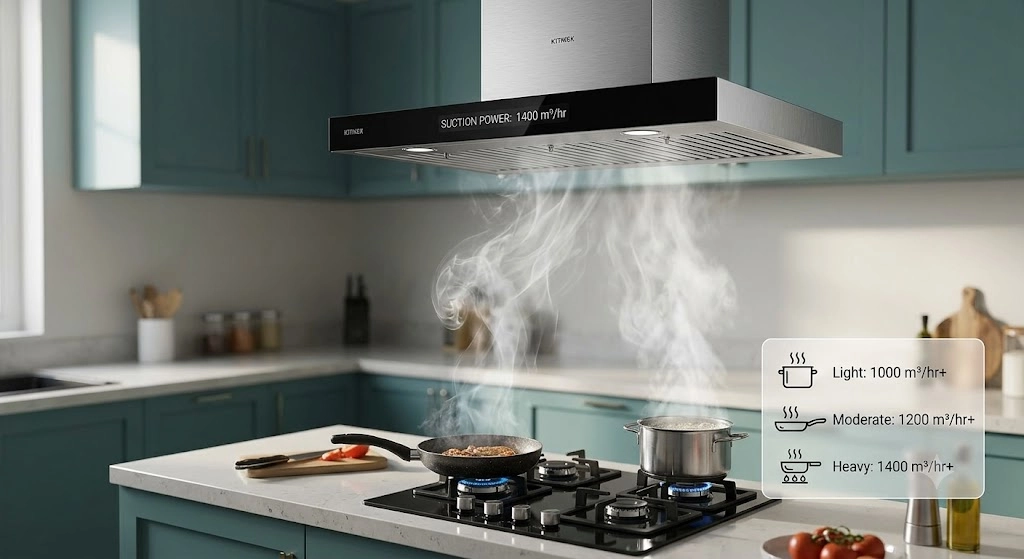
When buying a kitchen chimney, most people focus on the design, size, or brand. However, one of the most important factors is the chimney suction power. Choosing the wrong suction capacity can leave your kitchen full of smoke, grease, and cooking odours.
So, how much chimney suction power do you really need?
The answer depends on your cooking style, kitchen size, and the type of food you prepare every day.
In this complete guide, we'll help you choose the perfect kitchen chimney suction power for your home.
What Is Chimney Suction Power?
The suction power of a kitchen chimney refers to the amount of air it can remove from your kitchen in one hour. It is measured in Cubic Metres per Hour (m³/h).
Simply put:
- Higher suction = Better smoke removal
- Better grease collection
- Reduced cooking odours
- Cleaner kitchen walls and cabinets
- Fresher indoor air
Why Choosing the Right Suction Power Matters
Selecting the right chimney isn't about buying the highest suction available.
Too little suction means:
- Smoke remains in the kitchen
- Oil particles settle on cabinets
- Strong food smells linger
- Poor ventilation
Too much suction can:
- Produce unnecessary noise
- Consume more electricity
- Increase installation costs
- Be excessive for light cooking
The goal is to match the chimney to your cooking habits.
Choose Chimney Suction Based on Your Cooking Style
1. Light Cooking
Ideal for people who:
- Prepare simple meals
- Mostly boil, steam, or bake
- Rarely deep fry
- Use less oil
Recommended Suction Power
800–1000 m³/h
Perfect for:
- Small families
- Apartments
- Open kitchens with minimal cooking
2. Moderate Indian Cooking
If your daily cooking includes:
- Regular tadka
- Shallow frying
- Moderate spices
- Cooking twice a day
Recommended Suction Power
1000–1200 m³/h
This is the most common requirement for Indian households.
Suitable for:
- Families of 3–5 members
- Everyday Indian cooking
- Medium-sized kitchens
3. Heavy Indian Cooking
If your kitchen frequently sees:
- Deep frying
- Grilling
- Heavy tadka
- Frequent cooking
- Rich curries
- Strong spices
Recommended Suction Power
1200–1500 m³/h
Ideal for:
- Large families
- Daily elaborate cooking
- Closed kitchens
- Homes with extensive oil-based cooking
4. Commercial-Style or Intensive Cooking
If you:
- Cook for large gatherings
- Operate a home catering business
- Frequently prepare fried snacks
- Cook continuously for several hours
Recommended Suction Power
1500 m³/h and above
These high-performance chimneys efficiently handle heavy smoke and grease.
Chimney Suction Guide by Kitchen Size
Indian Kitchens Need Higher Suction
Unlike many Western kitchens, Indian cooking often involves:
- Tempering (tadka)
- Deep frying
- High-heat cooking
- Mustard oil
- Ghee
- Strong spices
These generate more smoke and grease, making a high-suction kitchen chimney especially beneficial.
Ducted vs Ductless Chimneys
Ducted Chimneys
Advantages:
- Higher suction efficiency
- Better smoke removal
- Reduced odours
- Lower maintenance
Best for:
- Heavy cooking
- Indian kitchens
Ductless Chimneys
Advantages:
- Easy installation
- No external duct required
Suitable for:
- Light cooking
- Apartments with installation limitations
Does Higher Suction Mean More Noise?
Generally, yes.
However, modern premium chimneys use:
- Brushless DC motors
- Advanced airflow technology
- Sound insulation
- Silent operation modes
Many premium models provide powerful suction while maintaining low noise levels.
Other Factors That Affect Chimney Performance
Choosing the right suction power is only part of the equation.
Also consider:
Kitchen Size
Larger kitchens require greater airflow.
Duct Length
Longer ducts reduce suction efficiency.
Number of Bends
Every bend in the duct decreases airflow.
Chimney Width
Choose a chimney that matches or exceeds your hob width.
Common sizes:
- 60 cm chimney
- 75 cm chimney
- 90 cm chimney
Signs Your Existing Chimney Has Insufficient Suction
If you notice any of the following, it may be time to upgrade:
- Smoke escaping into the kitchen
- Persistent food odours
- Greasy cabinets
- Oily walls
- Foggy windows while cooking
- Excessive heat near the cooktop
Quick Chimney Suction Recommendation Chart
Frequently Asked Questions
Is 1200 m³/h suction enough for Indian cooking?
Yes. A 1200 m³/h kitchen chimney is suitable for most Indian homes with regular frying, tadka, and daily cooking.
Is 1500 m³/h too much for a home kitchen?
Not necessarily. If you cook frequently, have a large family, or prepare oily and spicy food, a 1500 m³/h chimney offers excellent smoke and grease removal.
Which chimney is best for heavy frying?
Choose a ducted chimney with 1200–1500 m³/h suction, a high-quality filter system, and efficient grease collection.
Does chimney suction affect electricity consumption?
Higher suction models may consume slightly more electricity, but modern energy-efficient motors keep operating costs low.
Final Thoughts
Selecting the right chimney suction power isn't about choosing the highest number—it's about matching the chimney to your cooking habits and kitchen layout.
As a general rule:
- 800–1000 m³/h for light cooking
- 1000–1200 m³/h for regular Indian cooking
- 1200–1500 m³/h for heavy frying and large families
- 1500+ m³/h for intensive or commercial-style cooking
Investing in the right suction capacity ensures cleaner air, reduced grease build-up, improved comfort, and a healthier cooking environment.