
03/10/2024
Top 10 Essential Built-In Appliances Every Modern Kitchen Needs in 2026The Ultimate Kitchen Chimney Buying Guide: Suction, Size and Noise Levels Explained
by Admin
04/10/2024
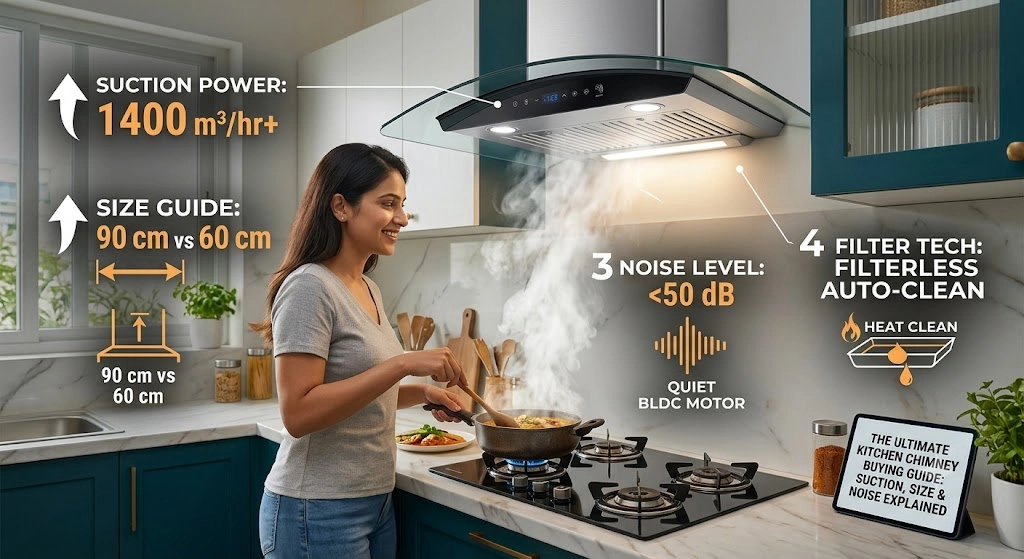
Buying a kitchen chimney is one of the smartest investments you can make for a clean, smoke-free, and healthy kitchen. Whether you're setting up a new modular kitchen or upgrading an old exhaust system, choosing the right chimney can make cooking more comfortable while keeping your kitchen free from grease, smoke, and lingering food odours.
However, with so many options available—different suction powers, chimney sizes, filter types, and noise levels—it's easy to get confused.
This comprehensive buying guide explains everything you need to know before purchasing the perfect kitchen chimney for your home.
Why Do You Need a Kitchen Chimney?
A kitchen chimney is designed to remove:
- Smoke
- Oil particles
- Grease
- Steam
- Cooking odours
- Heat generated while cooking
Benefits of installing a kitchen chimney include:
- Cleaner kitchen walls and cabinets
- Better indoor air quality
- Reduced grease accumulation
- Comfortable cooking environment
- Less maintenance and cleaning
- Modern kitchen aesthetics
1. Understanding Chimney Suction Power
The first specification you'll notice while buying a chimney is its suction power, measured in m³/h (Cubic Metres per Hour).
Higher suction power means the chimney can remove more smoke and grease in less time.
Recommended Suction Power
Cooking StyleRecommended SuctionLight Cooking800–1000 m³/hRegular Indian Cooking1000–1200 m³/hHeavy Cooking1200–1500 m³/hCommercial Style Cooking1500+ m³/h
Choose Higher Suction If You:
- Frequently deep fry food
- Cook spicy Indian dishes
- Use heavy tadka
- Have a closed kitchen
- Cook multiple meals daily
For most Indian households, 1000–1200 m³/h provides an excellent balance between performance and energy efficiency.
2. Choosing the Right Chimney Size
A chimney should always be at least as wide as your hob or cooktop.
Standard Kitchen Chimney Sizes
Hob SizeRecommended Chimney2 Burner60 cm3 Burner75 cm4 Burner90 cm5 Burner or Larger90 cm or wider
A wider chimney captures smoke more efficiently and prevents it from escaping into the kitchen.
3. Understanding Chimney Noise Levels
Noise is often overlooked when buying a chimney, but it significantly affects your cooking experience.
Noise is measured in decibels (dB).
Noise LevelExperience40–50 dBVery Quiet50–60 dBComfortable60–70 dBNoticeableAbove 70 dBLoud
Tips for a Quieter Chimney
Choose models with:
- BLDC motors
- Silent operation technology
- Advanced airflow design
- Quality insulation
Most premium kitchen chimneys operate between 50–60 dB, making them suitable for daily use.
4. Ducted vs Ductless Chimneys
Ducted Chimney
Smoke is expelled outside through a duct.
Advantages
- Better smoke removal
- Higher suction efficiency
- Less odour
- Lower maintenance
- Ideal for Indian cooking
Best For
- Heavy cooking
- Modular kitchens
- Frequent frying
Ductless Chimney
Uses carbon filters to clean and recirculate the air.
Advantages
- Easier installation
- No external duct required
Best For
- Apartments
- Light cooking
- Kitchens where duct installation isn't possible
For most Indian homes, a ducted kitchen chimney is the preferred choice due to its superior performance.
5. Filter Types Explained
Baffle Filter
Best for Indian cooking.
Advantages:
- Excellent grease separation
- Durable
- Easy to clean
- Handles heavy oil and smoke
Filterless Chimney
Uses advanced airflow technology instead of traditional filters.
Advantages:
- Low maintenance
- Consistent suction
- Easy cleaning
Ideal for modern kitchens.
Cassette Filter
Suitable for light cooking.
Requires more frequent cleaning and maintenance.
6. Auto-Clean Technology
Modern chimneys include Auto Clean technology that collects grease in a dedicated oil collector.
Benefits include:
- Less manual cleaning
- Longer motor life
- Better suction performance
- Improved hygiene
This feature is highly recommended for households that cook daily.
7. Control Options
Today's kitchen chimneys offer various control methods:
- Push Button Controls
- Touch Controls
- Gesture Controls
- Motion Sensors
- Remote Control
- Smart App Connectivity (Premium Models)
Gesture control is especially useful when your hands are wet or oily.
8. LED Lighting
Integrated LED lights improve visibility while cooking.
Advantages:
- Energy efficient
- Long-lasting
- Better illumination over the cooktop
- Stylish appearance
9. Motor Technology
The motor is the heart of a kitchen chimney.
Look for:
- BLDC Motor
- Copper Winding
- Energy-efficient motor
- Low-noise operation
- Long warranty
Premium motors provide better airflow with lower power consumption.
10. Installation Tips
Proper installation greatly affects chimney performance.
Best Practices
- Install 24–30 inches above the hob.
- Keep duct length as short as possible.
- Reduce bends in the duct.
- Use smooth ducts instead of flexible pipes.
- Ensure professional installation.
Improper installation can reduce suction efficiency by 20–40%.
11. Common Mistakes to Avoid
Avoid these common buying mistakes:
- Choosing a chimney smaller than the hob
- Buying low suction for heavy cooking
- Ignoring noise levels
- Overlooking filter maintenance
- Selecting style over performance
- Poor duct installation
- Ignoring warranty and service support
12. Which Kitchen Chimney Is Best for You?
Choose a 60 cm Chimney If:
- You have a 2-burner hob.
- You cook occasionally.
- Your kitchen is compact.
Choose a 75 cm Chimney If:
- You use a 3-burner hob.
- You cook daily.
- You have a medium-sized family.
Choose a 90 cm Chimney If:
- You own a 4 or 5-burner hob.
- You cook frequently.
- Your family is large.
- You prepare oily or spicy Indian dishes.
Kitchen Chimney Buying Checklist
✔ Match chimney width with hob size
✔ Choose the correct suction power
✔ Prefer a ducted chimney for Indian kitchens
✔ Consider auto-clean functionality
✔ Select low-noise models
✔ Check motor warranty
✔ Ensure professional installation
✔ Buy from a trusted brand with reliable after-sales support
Frequently Asked Questions
Which chimney is best for Indian cooking?
A ducted chimney with 1000–1200 m³/h or higher suction, a baffle filter or filterless design, and auto-clean technology is ideal for most Indian kitchens.
What is the ideal suction power for a home kitchen?
For regular Indian cooking, 1000–1200 m³/h is suitable. Heavy frying and larger families may benefit from 1200–1500 m³/h.
Does a bigger chimney provide better performance?
Yes. A chimney that is at least as wide as your cooktop captures smoke and grease more effectively.
Is a filterless chimney better than a baffle filter chimney?
Filterless chimneys are easier to maintain and provide consistent airflow. Baffle filter chimneys remain an excellent option for heavy oil-based cooking. The right choice depends on your cooking habits and maintenance preferences.
Final Thoughts
Choosing the right kitchen chimney isn't just about appearance—it directly affects your kitchen's cleanliness, comfort, and air quality.
Before buying, compare:
- Suction power
- Chimney size
- Noise level
- Filter type
- Motor quality
- Auto-clean technology
- Installation requirements
- Warranty and after-sales service
By matching these features to your cooking style and kitchen layout, you'll enjoy a cleaner, quieter, and healthier cooking environment for years to come.